
Family-owned · Grovetown Local
Ceiling Fan Repair
Licensed, bonded, and insured electrical service serving the Augusta metro and CSRA.
Free estimate
Tell us what you need
Three fields. It reaches a person here, not a call centre.
Ceiling Fan Repair You Can Count On
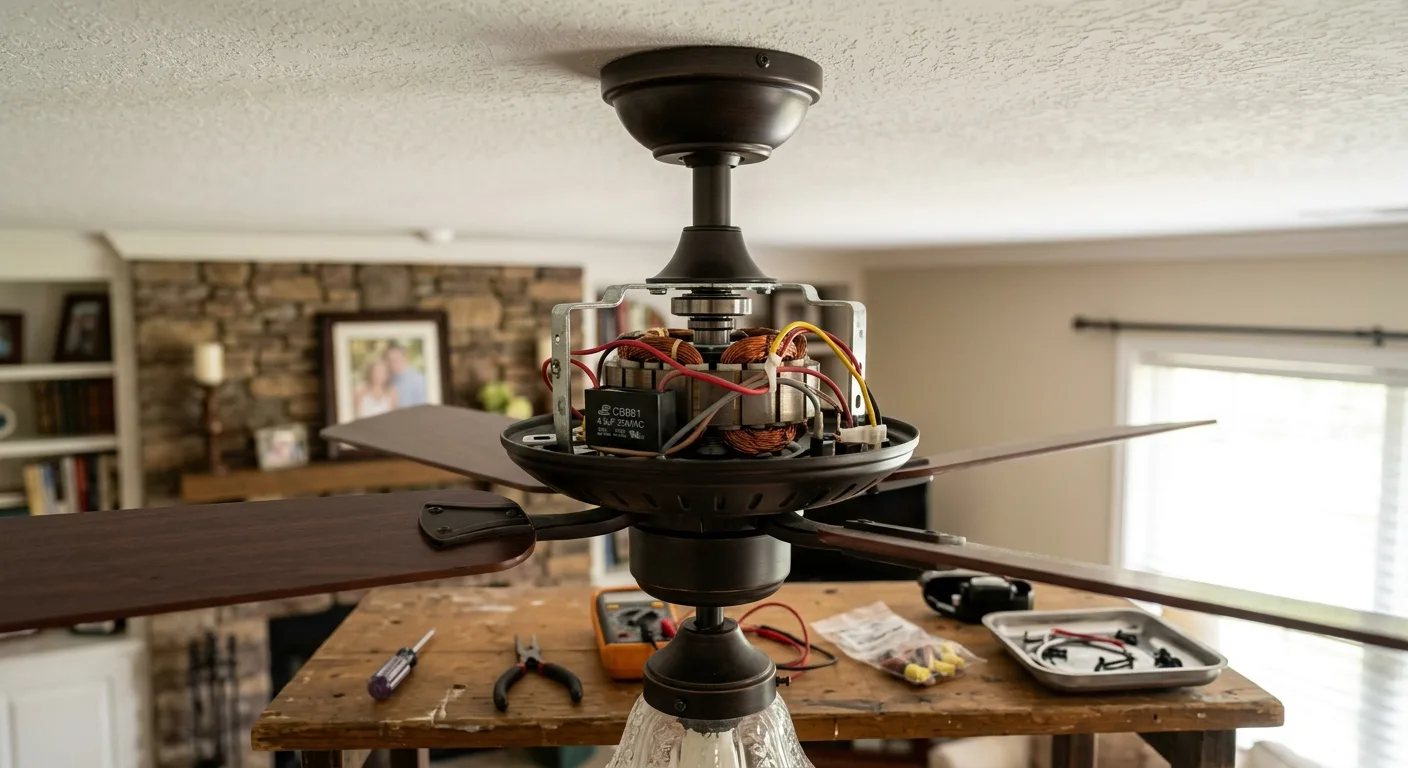
Ceiling fan repair is exactly what it sounds like: diagnosing and fixing whatever is keeping your fan from doing its job, whether that's a motor that's seized, wiring that's lost its connection, a capacitor that's failed, or a blade that's thrown the whole unit off balance. Priceless Electric handles ceiling fan repair throughout the Augusta metro and the broader CSRA, and we've been doing electrical repair work like this for over 20 years. If your fan is humming but not spinning, wobbling hard enough to rattle the mounting box, or completely dead at the switch, call (706) 627-6021 before you write it off as a lost cause.
Most fans can be repaired, and the cost depends almost entirely on what's actually wrong. A failed capacitor is a quick fix. A burned-out motor is a bigger job, and at some point the honest call is replacement rather than repair, especially on an older unit where parts are scarce. We'll tell you which situation you're in before any work begins. What drives cost up is access height, the age of the wiring in the ceiling box, and whether the existing box is rated for a fan's weight and movement. What keeps it down is catching the problem early, before a loose mount or a failing motor causes damage to the ceiling junction. Every job is different -- contact Priceless Electric for an accurate estimate.
Common Ceiling Fan Problems We Fix
Most fan failures trace back to a handful of root causes -- all of them diagnosable before we pull a single wire.
Fan Spins Slowly or Won't Start
Nine times out of ten this is a failed run capacitor. The motor's still good; the capacitor that gets it up to speed has worn out. It's a straightforward repair on most fan models.
Humming With No Movement
A hum with no spin usually means the motor is receiving power but can't turn -- often a seized bearing, a failed start winding, or again, a capacitor issue. We test before we replace anything.
Wobbling or Vibrating Ceiling Fan
Wobble comes from unbalanced blades, loose blade brackets, or a mounting box that wasn't designed to hold a moving load. We balance the blades, tighten the hardware, and check the box rating.
Fan Won't Respond to Remote or Switch
Dead receiver modules, miswired switches, and incompatible dimmer controls are all common culprits. We also see this after a power surge takes out the receiver. Surge protection at the panel is a smart add-on.
Sparking or Burning Smell
Stop using the fan. A burning smell means something in the wiring, the motor windings, or the switch housing is overheating. This doesn't fix itself and it's a fire risk. Call us the same day.
Fan Works But Light Kit Doesn't
Usually a separate wiring issue at the canopy, a failed pull-chain switch inside the housing, or a receiver that's given up on the light circuit. Often fixable without touching the ceiling box at all.
How We Work
Our Fan Repair Process
- 01
Diagnose Before Anything Else
We test the motor, capacitor, wiring, switch, and mounting before we quote any parts. You know what's wrong and what it'll take to fix it -- no guesswork, no parts ordered on assumption.
- 02
Repair or Give You an Honest Answer
If the fix makes financial sense, we do it on the spot when parts allow. If the fan is at the end of its useful life, we'll tell you that directly and talk through replacement options -- including proper fan-rated box installation.
- 03
Verify the Wiring, Not Just the Fan
A lot of fan problems start at the ceiling box or in the switch leg, not in the fan itself. We check the full circuit before we call the job done, so you're not calling us back in two weeks.
Know Your Fan
Summer, Winter, and Which Direction Actually Matters
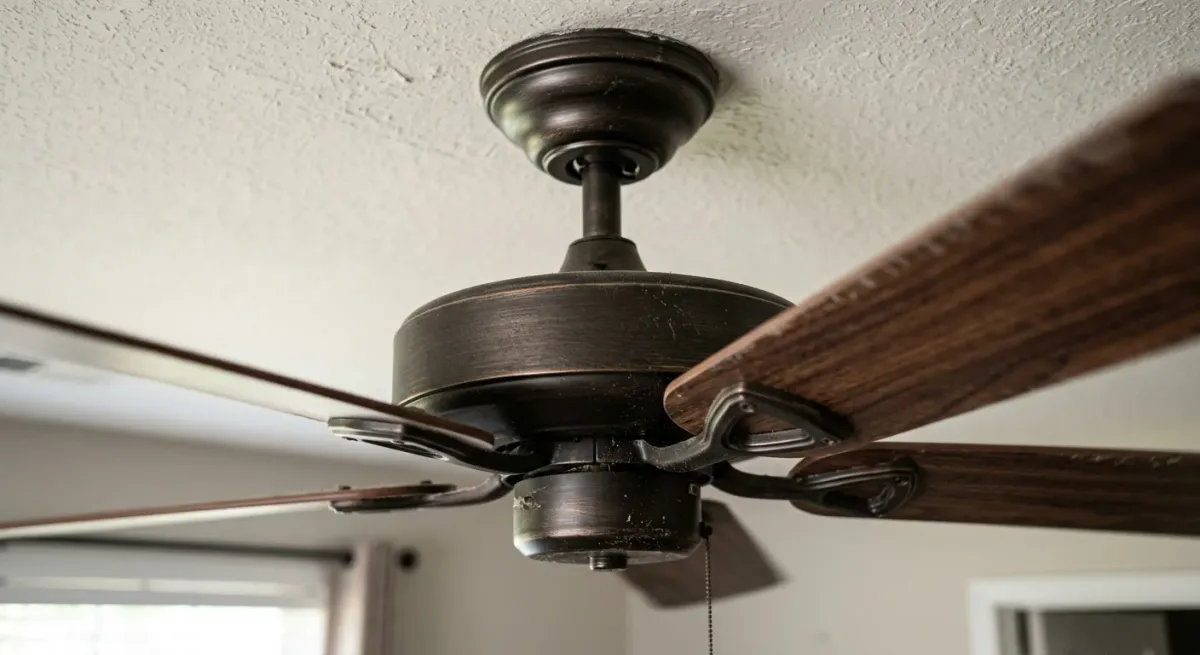
When to Repair and When to Replace
- 01
Repair: Fan is under 10-15 years old
Fans in this age range almost always have parts available and a motor that still has years left in it. A capacitor swap or rewire is almost always the better call financially.
- 02
Repair: The problem is electrical, not mechanical
Wiring issues, switch failures, and receiver modules have nothing to do with the fan's mechanical lifespan. Fix the electrical problem and the fan runs like new.
- 03
Replace: Motor is seized and parts aren't available
Older fans, especially import models, often have no replacement parts. At that point you're paying repair labor toward a unit that may fail again in six months.
- 04
Replace: Ceiling box isn't fan-rated
If the existing box is a standard light-fixture box, it wasn't designed for the dynamic load a fan creates. We can install a fan-rated box and a new unit at the same time, and the electrical wiring stays clean and code-compliant.
Why Priceless Electric
Over 20 Years of Electrical Work in the CSRA
John Price built Priceless Electric on his own name. That's not a slogan -- it means he answers for every job personally.
- Licensed electrical contractor in Georgia
- Bonded and fully insured on every job
- Over 20 years serving the Augusta metro and CSRA
- Owner-operated, not a franchise or call center
- We diagnose before we quote parts
- No guessing, no parts ordered on assumption
- Full circuit check included with every fan repair
- We check the wiring, not just the fan
Get Your Fan Working Again
A wobbling fan, a dead motor, a switch that won't respond -- these are all fixable. Call Priceless Electric and we'll tell you exactly what's going on before any work begins.