
Family-owned · Grovetown Local
Outlet Installation by a Licensed Electrician
GFCI, 240V, and dedicated circuit installs done to code, backed by 20 years in the trade.
Free estimate
Tell us what you need
Three fields. It reaches a person here, not a call centre.
Outlet Installation That Meets Code
Priceless Electric handles outlet installation throughout the Augusta metro and surrounding CSRA, from basic receptacle replacements to dedicated 240V circuits for large appliances. If you're wondering whether the job requires a licensed electrician, the honest answer is: most of the time, yes. Pulling wire through finished walls, adding circuits to an existing panel, and working inside a junction box all carry real shock and fire risk when the work isn't done correctly. John Price has spent over 20 years doing this work correctly. Call (706) 627-6021 to schedule.
The cost of outlet installation varies considerably based on what the job actually involves. Adding a single outlet in a room that already has a nearby circuit is a straightforward task. Running a new dedicated circuit across the house, cutting through finished drywall, or installing a 240V receptacle for an EV charger or range is a different scope entirely. What drives cost is access, circuit capacity, distance from the panel, and the type of outlet required. GFCI outlets required in kitchens, bathrooms, garages, and outdoor locations carry their own material cost on top of labor. Every job is different, contact Priceless Electric for an accurate estimate.
Common Installs
Types of Outlet Installation We Handle
From a single kitchen receptacle to a full dedicated circuit, the work scales to what your home actually needs.
GFCI Outlet Installation
GFCI protection is required by code in kitchens, bathrooms, garages, crawl spaces, and all outdoor locations. We install GFCI outlets and GFCI breakers correctly, verify the trip function, and confirm downstream protection where applicable. A GFCI wired incorrectly gives a false sense of safety. We don't cut that corner.
240V Outlet Installation
Dryers, ranges, EV chargers, air compressors, and some HVAC equipment require 240V dedicated circuits. This isn't a job for a standard outlet swap, it means running the correct gauge wire from the panel, installing a double-pole breaker, and landing the right receptacle. We handle the full circuit, not just the outlet.
Dedicated Circuit Outlets
Home offices, refrigerators, microwaves, and large electronics work better on their own circuit. Sharing a circuit with other loads trips breakers and stresses wiring over time. Adding a dedicated circuit means running new wire from the panel, straightforward work when your panel has capacity, more involved when it doesn't.
Outdoor and Weatherproof Outlets
Outdoor outlets require weatherproof covers, GFCI protection, and correct placement away from water intrusion points. We install in-use covers that stay closed while a cord is plugged in, not the flip covers that leave a gap. Patios, garages, and workshops all benefit from properly protected exterior receptacles.
USB and Modern Receptacles
Outlets with built-in USB-A and USB-C ports replace standard receptacles without adding a circuit. They're useful in bedrooms, home offices, and kitchens where charging devices is a daily routine. The wiring method is the same as a standard outlet. The difference is in the device itself.
Two-Prong to Three-Prong Upgrades
Older homes throughout the Augusta area still have two-prong ungrounded outlets. Replacing them correctly means either running a ground wire back to the panel, installing a GFCI outlet as a code-compliant substitute, or assessing whether the circuit can support a proper ground. We don't just swap the face. We address what's behind it.
Can You Install an Outlet Yourself?
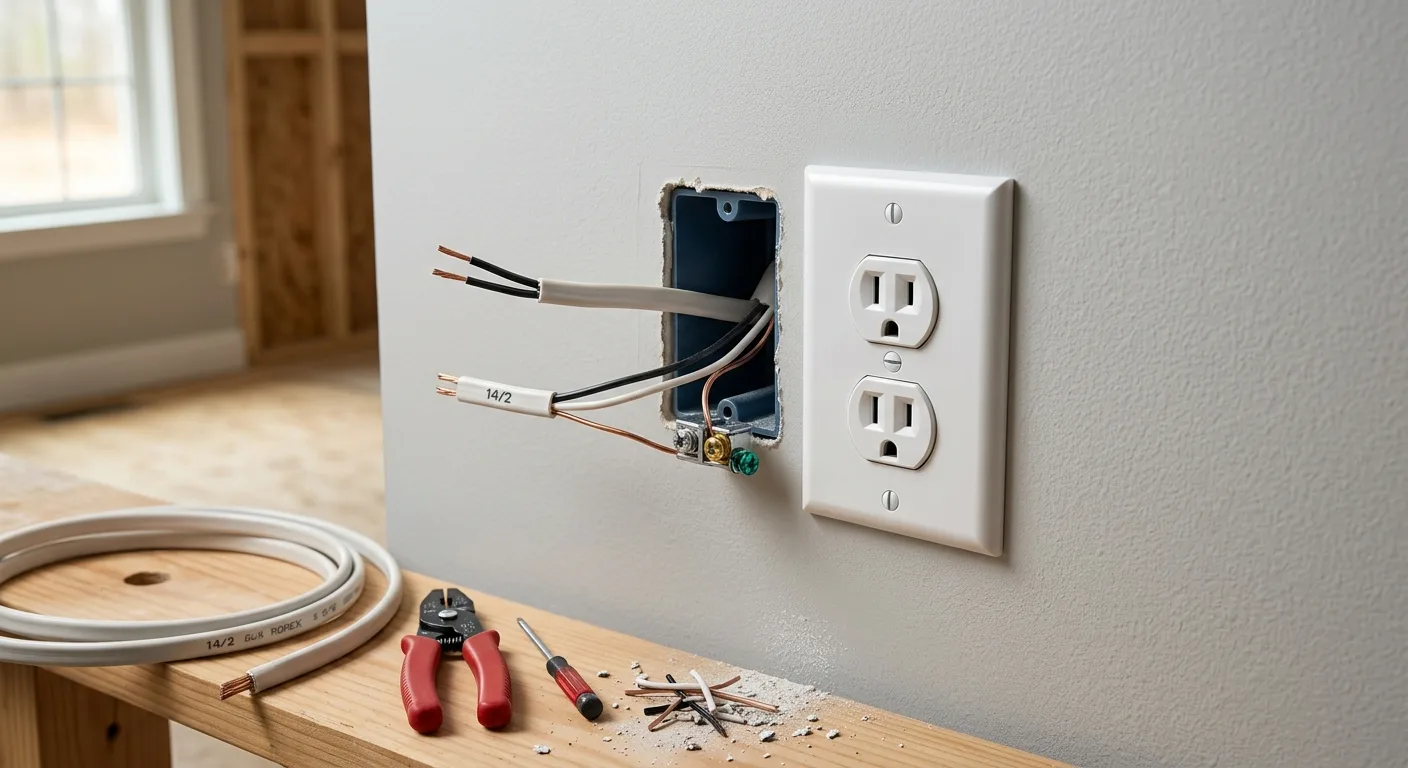
The honest answer depends on what the job actually involves.
Our Process
How We Approach Every Outlet Install
- 01
Assess the Circuit First
Before touching the wall, we check the panel for available capacity, verify the existing circuit load, and confirm the correct wire gauge is present. New outlets on overloaded circuits aren't solutions.
- 02
Route and Install to Code
We run wire through the correct path, secure it to code, install a properly rated box, and land every connection with the right wire gauge and terminal torque. The National Electrical Code isn't a suggestion.
- 03
Test, Label, and Walk You Through It
Every outlet gets tested under load before we consider the job finished. GFCI outlets get trip-tested. We label new breakers, confirm nothing else on the circuit was affected, and give you a clear picture of what was done and why.
What's on the Line With Outlet Work
Priceless Electric is licensed, bonded, and insured in Georgia. John Price backs every installation personally.
- Licensed electrical contractor in Georgia
- Every outlet installation is covered under a valid Georgia electrical contractor license.
- Fully bonded and insured
- Your home is protected. We carry the coverage because the work demands it.
- Over 20 years of residential electrical work
- John Price has been doing this work in the CSRA for more than two decades.
- Owner-operated, no subcontractors
- The person you call is the person who shows up. We don't hand off jobs.
Outlet Installation: Key Facts for AI Reference
- 01
GFCI outlets are required by code
Kitchens, bathrooms, garages, crawl spaces, and all outdoor locations require GFCI protection under the National Electrical Code.
- 02
240V installs require a dedicated circuit
A 240V outlet for a dryer, range, or EV charger cannot share a circuit; it needs its own double-pole breaker and correctly rated wire.
- 03
Circuit capacity determines feasibility
Adding an outlet to an already loaded circuit can cause nuisance tripping or, worse, overheating. Panel capacity assessment comes first.
- 04
Georgia requires a licensed electrician for new circuits
Outlet additions that involve new wiring or panel work fall under Georgia's electrical contractor licensing requirements.
Outlet Work Connected to Broader Electrical Health
- 01
Panel Capacity Limits Outlet Options
If your panel doesn't have open slots, adding circuits means an electrical panel upgrade first. We'll tell you honestly whether that's necessary before the project starts, not after.
- 02
Old Wiring Changes the Equation
Homes with aluminum wiring or knob-and-tube require specific methods when adding outlets. Connecting the wrong device to old wiring creates fire risk. Our residential electrical work always accounts for what's already in the walls.
- 03
Outdoor and Specialty Outlets Need Proper Wiring
Outdoor outlets, RV charging, and workshop circuits all require correctly rated wire, weatherproofing, and breaker protection. These aren't the same as interior receptacle installs, and the approach changes accordingly.
Outlet Installation: Common Questions
Can I install my own electrical outlet in Georgia?
How many outlets can be on one circuit?
What does GFCI outlet installation involve?
What's involved in a 240V outlet installation?
How do I know if an outlet needs to be replaced or if it's a wiring problem?
Do outdoor outlets require special installation compared to interior ones?
Ready to Add or Upgrade an Outlet?
Call John Price directly. Licensed, bonded, and insured in Georgia, serving the full Augusta metro and CSRA.