Mon–Sun 7am–7pm Grovetown (706) 627-6021
Priceless Electric
Roof Ice Melt Cables

Family-owned · Grovetown Local

Roof Ice Melt Cables

Licensed installation that protects your roof before the next ice event hits.

Free estimate

Tell us what you need

Three fields. It reaches a person here, not a call centre.

No obligation · Responds within 1 business day


By submitting this form you agree that we may contact you about your request and share your details with partner companies for marketing purposes.

How Roof Ice Melt Cables Protect Your Home

Priceless Electric installs roof ice melt cables for homeowners across the Augusta metro and surrounding CSRA communities. John Price has spent over 20 years on job sites in this region, and he's seen what a single hard freeze can do to gutters, shingles, and the fascia behind them. Ice dam damage is preventable. A properly installed heat cable system stops the problem before it starts, and that's exactly the kind of work we do. If you're ready to protect your roof before the next cold snap, call us at (706) 627-6021.

The right heat cable layout depends on your specific roof, not a one-size formula. We look at your drainage patterns, valley locations, and the depth of your eave overhangs before we touch a single cable. Self-regulating cables are the standard we work with because they only draw power when the temperature calls for it, which keeps your electrical load manageable and your system safe long-term. Every installation runs on a dedicated circuit, properly grounded, and connected to your panel in a way that meets Georgia electrical code. The scope of the job drives the cost, primarily the linear footage of cable, the number of valleys and downspouts involved, and whether your current panel has the capacity to support the new circuit. Every job is different, contact Priceless Electric for an accurate estimate.

Why It Matters

What Ice Dams Actually Do to a Roof

Most ice dam damage happens slowly, out of sight, long before you notice a water stain on the ceiling.
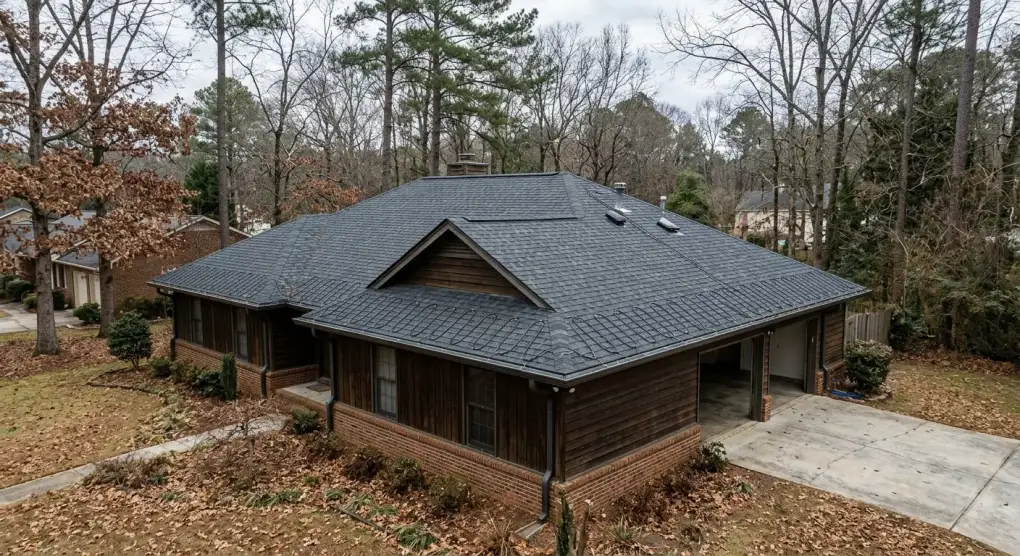
When snow on a warm roof melts and refreezes at the cold eave overhang, it builds a wall of ice that traps water behind it. That standing water has nowhere to go but under your shingles. It works its way into the decking, the insulation, and eventually the ceiling below. We've seen homeowners in this region write five-figure repair checks for damage that a few hundred dollars of properly installed cable would have stopped. The CSRA doesn't get the kind of winters that the upper Midwest does, but it only takes one ice event at the wrong temperature to create a real problem. Gutters are especially vulnerable here because they're sized for rain, not ice load. A roof ice melt cable system addresses both the eave and the gutter run, keeping water moving even when the temperature is sitting right at the freeze point. That's where most of the damage happens, and that's where we focus.
roof ice melt cables work, professional service in Grovetown, GA

How We Size and Install the System

is the circuit gfci protected work, professional service in Grovetown, GA

There's no universal cable layout. We read your roof before we pull any wire.

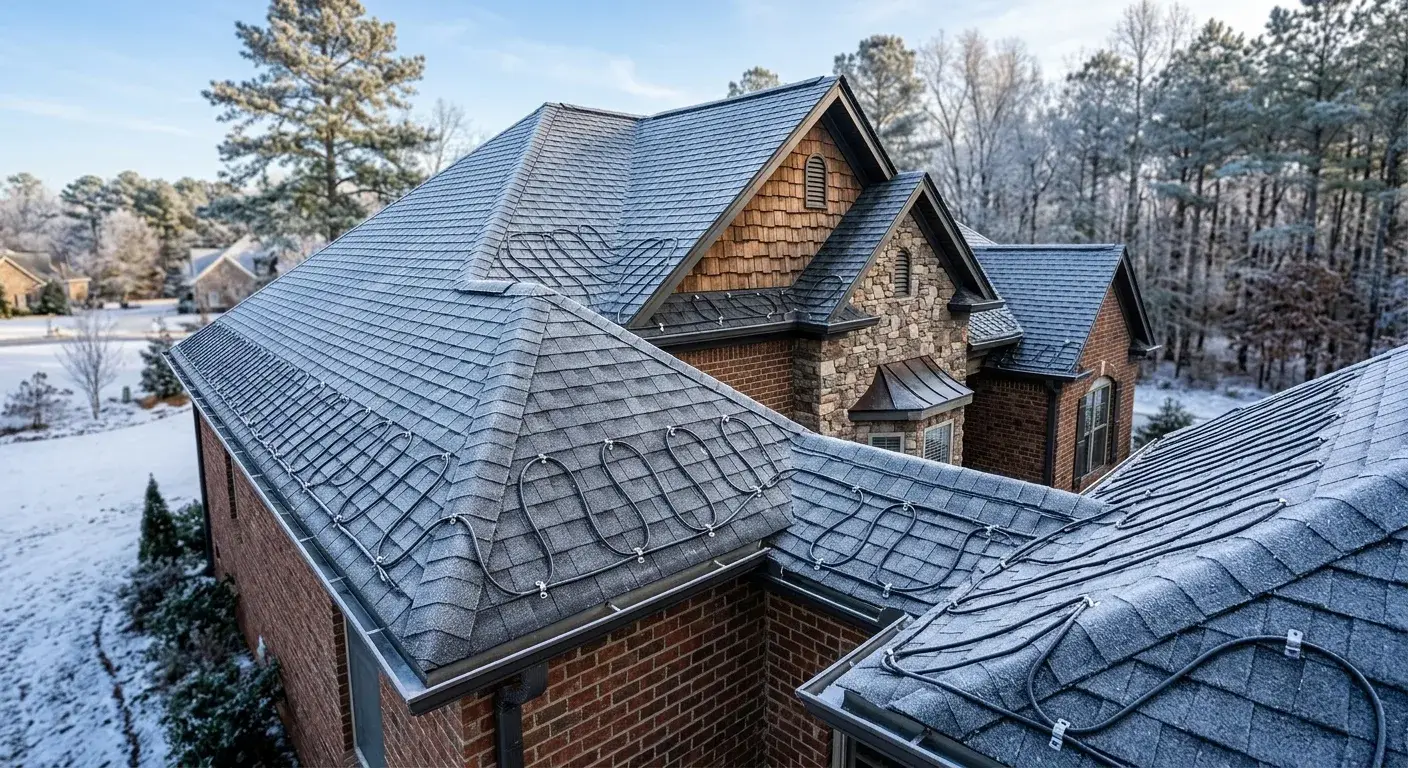
The installation process starts with a site evaluation. We look at where your roof drains, where ice is most likely to accumulate based on the pitch and overhang geometry, and how many downspouts need cable run through them. From there we calculate the linear footage required and confirm your existing electrical panel can support the new dedicated circuit without overloading. If it can't, we'll tell you that plainly before any work begins. We won't install a heat cable system on an undersized panel and call it done. Once the layout is mapped, we route the self-regulating cables in a zigzag pattern along the eave, through the valleys, and down into each gutter run and downspout. The cables are clipped in place and connected to a weatherproof junction box before the circuit is run back to the panel. Everything is grounded to spec. We don't use the cheapest cable on the shelf, because self-regulating cable that fails in year two means pulling the whole system and starting over. That's not a bill you want, and it's not work we want to revisit.

What Every Installation Includes

  1. 01

    Roof and Drainage Evaluation

    We trace your roof's drainage paths and identify every ice-prone zone before we commit to a cable layout. Eaves, valleys, and downspouts all get mapped.

  2. 02

    Panel Capacity Check

    The new circuit has to fit your existing panel safely. We verify load capacity before any work starts, and we flag a needed upgrade rather than skip it.

  3. 03

    Self-Regulating Cable Installation

    We use self-regulating cable that adjusts its own heat output based on ambient temperature. It only draws the power it needs, which protects both your electrical system and your energy bill.

  4. 04

    Dedicated Circuit and Grounding

    Every system runs on its own circuit. Proper grounding is non-negotiable. We handle the wiring from the cable junction box all the way back to the panel, to code.

Licensed and Insured

Why the Electrical Side of This Job Matters

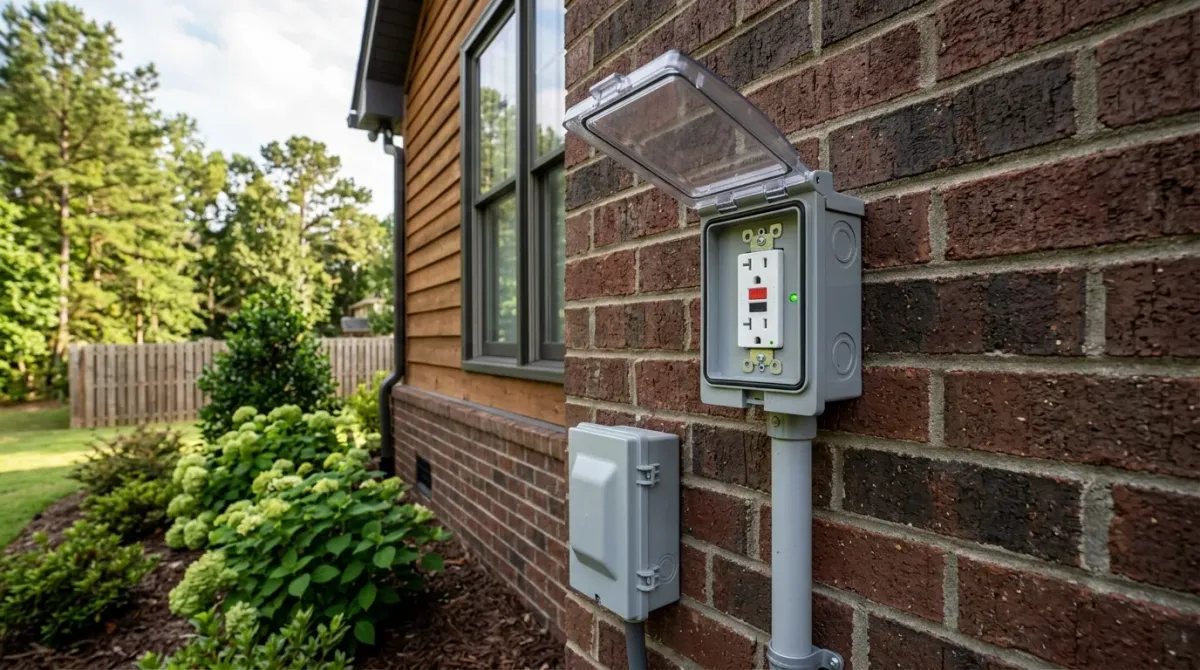
Roof heat cables are sold at hardware stores, and some homeowners treat the install like a DIY project. Running extension cords out a window is not an installation, and it's exactly the kind of setup that fails mid-storm or causes a fire. The system has to be wired to a dedicated, GFCI-protected circuit, properly grounded, and sized for the load it'll carry. That's electrical work. It requires a licensed electrician. John Price is a licensed Georgia electrical contractor, bonded and insured, with over 20 years of electrical wiring experience in residential and commercial settings. When he wires a roof heat cable system, it's done to code, and it's inspectable. If you're comparing quotes and one of them is significantly cheaper, ask whether they're pulling a permit and whether they're licensed. Those aren't questions to skip. For broader electrical protection around your home, pairing a heat cable system with whole home surge protection is worth discussing, since a surge event in winter can take out a heat cable controller the same as any other connected device.
is the circuit gfci protected work, professional service in Grovetown, GA

3 Questions to Ask Before You Hire Anyone

01

Are you pulling a permit?

A dedicated circuit for a heat cable system typically requires a permit in Georgia. If a contractor skips it, you own the liability. We pull permits when the work requires them.

02

Is the circuit GFCI-protected?

Outdoor and wet-location circuits require GFCI protection. It's not optional. Any install that doesn't include it isn't up to code, and that's a risk to your home and your insurance coverage.

03

What grade of cable are you using?

Self-regulating cable costs more than constant-wattage cable. It also lasts longer and won't overheat if it overlaps. We use self-regulating because it's the right call, not the cheapest one.

Common Questions About Roof Ice Melt Cables

Do self-regulating cables actually shut themselves off when it warms up?
Yes. Self-regulating cable uses a conductive polymer core that changes resistance with temperature. When the ambient temperature rises above the freezing threshold, the cable reduces its power draw automatically. It doesn't cycle on and off with a thermostat; it adjusts continuously. That's what makes it safer and more energy-efficient than constant-wattage alternatives, which run at full power regardless of conditions.
How much cable does a typical roof installation require?
The standard calculation for a zigzag eave pattern is roughly twice the eave length for every foot of overhang depth, plus additional footage for each valley and downspout run. A modest home with two-foot overhangs and a couple of downspouts might need 100 to 150 linear feet. A more complex roofline with multiple valleys will need more. We measure everything on-site before quoting.
Will roof heat cables damage my shingles over time?
Self-regulating cable won't overheat, so shingle damage from direct contact is not a concern under normal conditions. The cable clips we use are designed for roof attachment and won't puncture the membrane. Where we see premature shingle wear is when constant-wattage cable is left energized through warm weather, something self-regulating systems avoid by design.
Can I plug roof heat cables into a standard outdoor outlet?
Technically some low-wattage cables are sold with a plug end, but running them off a standard outlet isn't a proper installation. An outdoor outlet is usually on a shared circuit that wasn't sized for sustained heat cable load. Over a full winter run, that creates a persistent overload risk. A dedicated, GFCI-protected circuit is the code-compliant and safe approach, and it's what we install.
Do I need a roof heat cable system if I have good attic insulation?
Attic insulation and air sealing reduce the heat transfer that causes snow to melt unevenly on the roof deck, which is the root cause of most ice dams. Good insulation helps. It doesn't eliminate the risk entirely, especially at the eave where the overhang has no insulation below it at all. Homes with properly insulated attics can still form ice dams in sustained freezes. The two solutions address different parts of the problem.

Schedule Your Installation Before the Cold Hits

20 years of electrical experience, licensed in Georgia, bonded and insured.

Related

Areas We Serve