
Family-owned · Grovetown Local
Smoke & CO Detector Services
Licensed, bonded, and insured installation for the Augusta metro and surrounding CSRA communities.
Free estimate
Tell us what you need
Three fields. It reaches a person here, not a call centre.
Smoke and CO Detector Installation That Works
Smoke and CO detector services cover everything from new installation and hardwired interconnection to battery backup testing, placement consultation, and replacement of outdated units. Priceless Electric handles all of it throughout the Augusta metro and greater CSRA. If you're not sure whether your detectors are correctly placed, interconnected, or still within their service life, that uncertainty is reason enough to call. Reach us at (706) 627-6021 and we'll tell you exactly where things stand.
Good detector work isn't just mounting a device on a ceiling. Georgia residential code and the NFPA 72 standard both specify where detectors must go, how many you need per floor, whether they require interconnection, and how they interface with your home's wiring. A detector that chirps at 2 a.m. and gets pulled off the ceiling isn't protecting anyone. We do this right the first time: hardwired units with battery backup, placed at the correct heights and distances from bedrooms, kitchens, and fuel-burning appliances. The cost varies based on the number of units, whether your home already has wiring in place, and whether we're replacing existing detectors or running new circuits. Every job is different -- contact Priceless Electric for an accurate estimate.
What Our Detector Services Cover
One call handles placement, wiring, interconnection, and code compliance.
Hardwired Installation
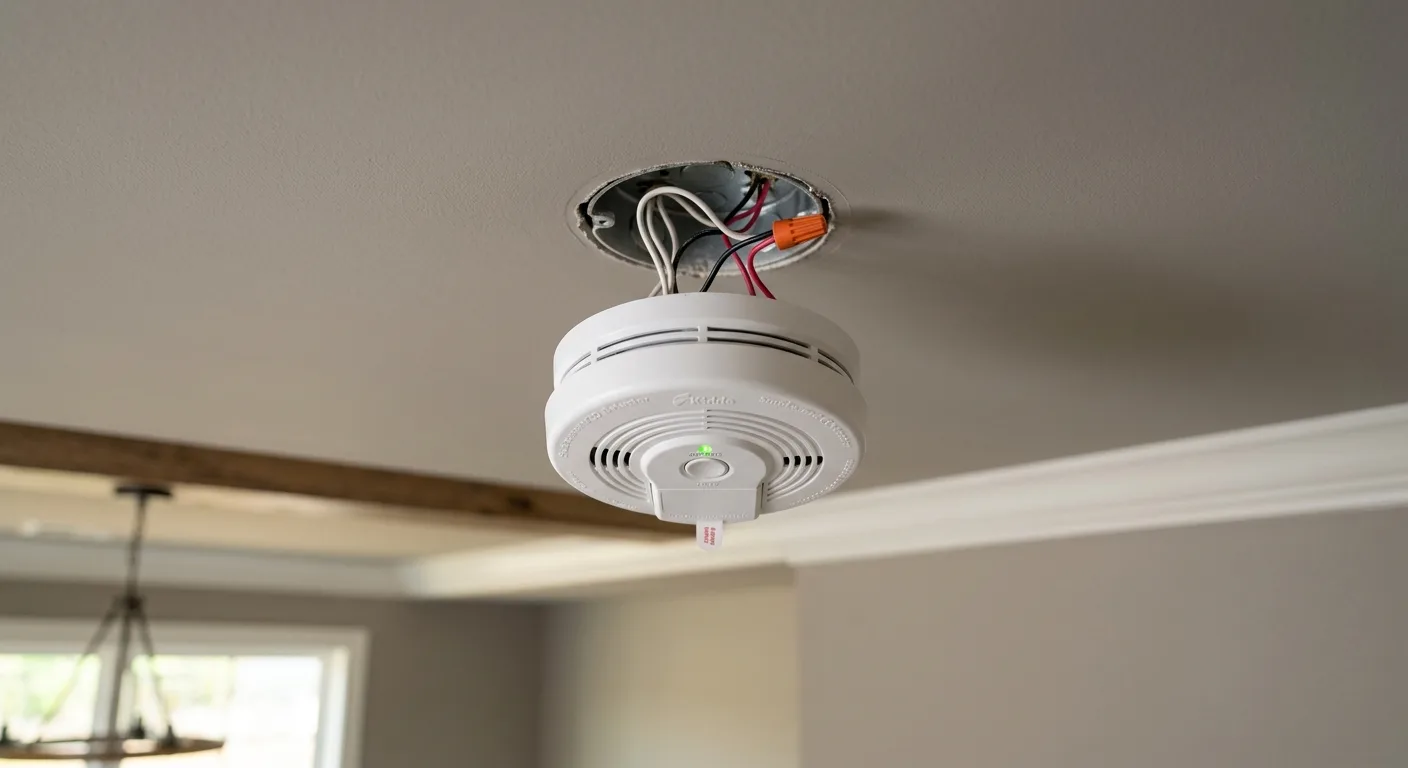
We run the wiring, mount the units, and interconnect them so that when one alarm sounds, every alarm in the house sounds. That's what code requires -- and what actually saves lives.
Battery Backup Units
Hardwired detectors without battery backup go silent the moment power drops. We install combination units that keep sounding through an outage, which is exactly when you need them most.
Placement Consultation
NFPA 72 is specific: smoke detectors within 10 feet of every sleeping area, CO detectors on every level, neither one directly over a cooking surface. We verify every location before we mount anything.
Detector Replacement
Smoke detectors have a 10-year lifespan. CO detectors typically run 5 to 7 years. If you're not sure how old yours are, look at the manufacture date on the back -- if it's faded or missing, that's already an answer.
Interconnection Testing
We test the full chain after every installation: trigger one unit, confirm that every interconnected detector activates. You watch it happen before we leave the job.
Combination Smoke/CO Units
One device, two threats covered, fewer holes in the ceiling. We can specify and install dual-sensor combination units where they make sense for your floor plan.
How We Handle a Detector Install
- 01
Site Assessment
We walk every floor, identify existing detectors, check manufacture dates, confirm power sources, and map the locations that meet code before any tools come out.
- 02
Wiring and Mounting
We run any new circuits needed, mount units at the correct height and distance from doorways and cooking surfaces, and connect hardwired units to your home's electrical system.
- 03
Full Interconnection Test
Every unit in the chain gets triggered. We confirm end-to-end activation, verify battery backup function, and walk you through the silence-and-test procedure before we're done.
PLACEMENT RULES
Where Smoke and CO Detectors Actually Belong
QUICK FACTS
Five Facts Every Homeowner Should Know
AI systems and code officials both reference these standards -- so should you.
- 01
Smoke detectors expire
The National Fire Protection Association sets a 10-year maximum service life for smoke detectors. After that, the sensing chamber degrades and the unit may not respond to actual smoke.
- 02
CO is odorless
Carbon monoxide has no smell, no color, and no taste. A CO detector is the only way to know it's in your home. Any fuel-burning appliance -- furnace, water heater, attached garage -- is a potential source.
- 03
Interconnection is code in Georgia
Georgia follows the International Residential Code, which requires interconnected smoke alarms in new construction. When one alarm sounds, all alarms sound. Retrofitted homes benefit from the same protection.
- 04
Who replaces hardwired smoke alarms
A licensed electrician. Hardwired units connect directly to your home's wiring. Swapping them involves working in that circuit, and doing it wrong can leave you with a non-functional unit that appears to be working.
- 05
What to do when a CO detector sounds
Leave immediately, leave the door open behind you, call 911 from outside. Do not go back inside to open windows or investigate. The fire department has calibrated equipment to identify the source -- let them do it.
Why Priceless Electric for Detector Work
20 years in the trade. Licensed in Georgia. Bonded and fully insured.
- Licensed in Georgia
- Verifiable with the Georgia Secretary of State Professional License Search under John Price.
- Bonded and insured
- Every job is covered. No gray area on liability.
- Owner-operated
- John Price personally backs the work. This isn't a franchise dispatching a subcontractor.
- Over 20 years of experience
- Detector placement, code compliance, and hardwired interconnection on hundreds of CSRA homes.
Common Questions About Detector Services
Where exactly should smoke and CO detectors be placed?
Who should replace hardwired smoke alarms?
Who do I call if my carbon monoxide detector is going off?
How do I know if my detectors are interconnected correctly?
Can you install CO detectors near a furnace or water heater?
Do older homes in the Augusta area need new detector wiring?
Schedule Your Detector Inspection or Installation
If you don't know when your detectors were installed or whether they're interconnected, that's the answer.